With the arrival of the Prince of Cambridge Monday (his name has yet to be released), many designers joined in on the royal baby fun by designing clothes, rocking horses, prams, etc. for HRH. Check out more of the designs on WWD.
Tag: fashion
Fast Five: Summer Wardrobe Must-Haves
1. Alice + Olivia—Mya Strapless Tulip Dress $396
2. stella & dot—Jolie Necklace $79
3. United Colors of Benetton—Skinny Pants (price not available)
4. Cole Haan—Bedford Izzie Clutch $89
6. TOPSHOP—Silk Floral Tee by Boutique $140
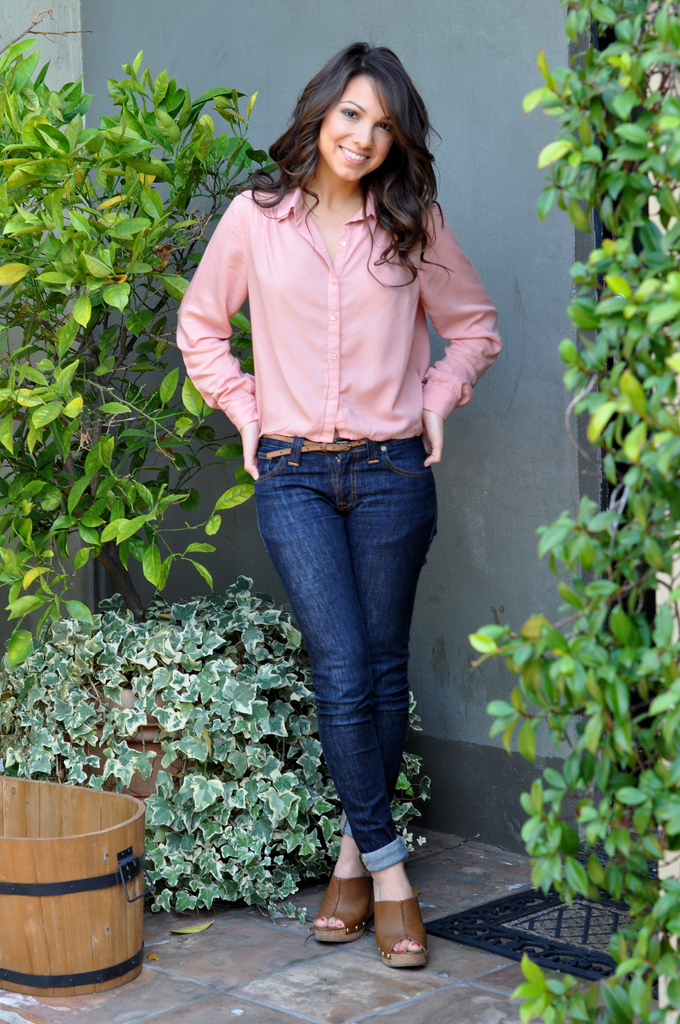
SimplyStylist.com’s Sarah Pollack Boyd
Fashion PR is not just a tough business, but it can also be a mean one. But Sarah Pollack Boyd has taken a different approach as she kills them with kindness — and it’s certainly working. After nine years spent building a successful fashion-focused career in public relations, Sarah launched the stylist-centric SimplyStylist.com in January 2012.
In just a few short months, SimplyStylist.com has become a hub for stylists and lovers of fashion. And the recent Simply Stylist Seminar event at the W Hollywood drew many participants who flocked to learn valuable career advice from industry experts, including Brenna Egan, Refinery29.com Los Angeles Editor and former Vogue staffer; Jamie Krell, E! and Style Network Style Expert; Alexis and Kym McClay, Naven Designers; Jeanne Yang, Celebrity Stylist, who also collaborates with Katie Holmes on their clothing line, Holmes & Yang; and Shea Marie, CheyenneMeetsChanel.com Fashion Blogger.
Sarah was nice enough to take time out from her hectic schedule to answer The Gucci Hoochie’s questions about her career, her fashion and her advice for PR newbies. Read on!
How did you make your way to Los Angeles?
I’m a small town girl from York, Pennsylvania. I ended up in Los Angeles because, for fashion, it’s really Los Angeles or New York. My sister had moved to L.A. when I just started college, and I would visit her at least once a year and always told myself that I would live here. So, as soon as I graduated, I packed up and moved out!
You were inspired to work in the industry after shadowing department store buyers. What was it about their work that inspired you to work in fashion?
It was at Bon Ton back in Pennsylvania. I had no idea what I wanted to major in for college, let alone my life path! My high school offered a field trip to shadow store buyers, and I couldn’t believe that shopping could actually be a job. I immediately started looking into fashion schools, and the next year I was beginning to pave my path into the world of fashion.
What is it like working in fashion PR?
Fashion PR sounds really glamorous, but it’s a lot of emails and pitches. With current technology, editors and producers want everything pitched through email so it makes being in fashion PR much more email intensive. It is fun though when you get to be on-site for a fitting or a celebrity showroom visit.
What was the most difficult aspect of working in fashion PR?
Being denied. You have to hear the word “no” or even worse, get no response multiple times a day. There are countless pitches going out daily and very few make it to print. It’s a long and tedious process, but it all pays off when you see the placement!
What is your favorite part of your job?
Ummm all the free clothes?!
What advice would you give to new faces in the fashion PR business?
I would say to definitely have THICK skin! And intern, intern, intern — get as much experience as you possibly can. Also, be kind. It goes a long way, and you never know where you can help someone or someone can help you down the road. PR people are known for not being the nicest, but I chose the route of being super sweet and it has proved to be successful so far.
When you launched SimplyStylist.com, what were you most nervous about? What were you most excited about?
I was definitely most nervous about my customers — do I have enough? Will people be as interested in the topic as I am? Will people come to my events? I was most excited to build my own business from the ground up and to be able to bring a service to women that I know everyone can find value in. People buy the fashion magazines, so why not hear about the trends in person from the experts?
You note that people buy magazines, so why not hear about the trends in person — was this your motivation behind starting simply stylist? What sparked the idea for the website?
From my years in PR I noticed that some of the best celebrity placements (a celebrity wearing my clients’ clothing) came through their wardrobe stylist. And the wardrobe stylists never got any credit for it! The fashion editors and the celebrities get showered with gifts and taken to fancy dinners. Years ago, stylists were lugging around clothing, working 150-hour work weeks and got no credit for some of these amazing trends THEY started by putting it on their client. I started SimplyStylist.com to give back to these stylists and show the world who the trendsetters really are.
What is your typical day like running SimplyStylist.com?
I’m wearing ALL types of hats so I try to think big picture and delegate the smaller tasks. Otherwise I find myself running in circles trying to be everything to everyone. I know my strengths and I know my weaknesses — and what I enjoy doing. My love is relationship building and connecting, so I try to book at least one meeting a day with either a stylist, a clothing brand, a fellow PR executive, etc. Each day I put together my to-do list of what I want to accomplish, which sometimes includes going to setup a business license for the company or going to a runway show. This is why I love my job … every day is different and exciting. I also have two AMAZING interns who help with everything from finding content for the site, local errands, research for events and more.
What would you say is the key to your success with SimplyStylist.com?
Staying true to what I would want out of an event. Making sure there are fantastic panelists, amazing networking opportunities and that the content of the seminar is useful to the attendees.
Finally, for the most important question: Who is your favorite designer?
Marchesa can really do no wrong for red carpet. For everyday I love mixing high and low — brands I live in include Michael Kors, H&M, Aryn K. and Agave Denim.
How to Shop Online (And Not Get Screwed)

Gilt, Rue La La, ideeli, HauteLook — we’ve all been there. What else have we all been? Completely excited and anxious, anticipating our latest purchase, an amazing deal we found online and just couldn’t resist. Seven for All Mankind jeans for $40 … yes, please! Then our pretty package arrives and we rip through the tape and bubble wrap only to find something we did not want. I mean, yes, it’s exactly what we ordered, but maybe the fabric is shiny or stretchy, the wrong color, the wrong fit, on and on. So many pitfalls, so little money for re-stocking fees. But fear not: You can learn from my mistakes. So, how do you make sure you’re making quality clothing purchases online?
1. Make Google Images your best friend.
Those pictures of super skinny models can’t always be relied on to give you an accurate picture of how clothes will fit, and the same goes for the lighting. Once you’ve narrowed your shopping choices, double check them by running the name through a search engine to see what pops up. Sometimes it can make or break a purchase. I was on the fence about a fairly expensive Rachel Zoe skirt, and I was tipped toward “add to cart” when I saw how the print and its neon/neutral color combo popped. Gorgeous!
2. Don’t look at the original price.
It’s so tantalizing. You think, “Wowzers … I could buy this $300 shirt for only $39! Thanks, Gilt, my new bestie!” Stop right there. Yes, that shirt was once worth $300, but that doesn’t mean you should buy it. Concentrate on the sale price. If you walked into a store and saw that shirt, not on sale, for $39, would you still be as interested? That heavily marked down price makes quite the intoxicating shopping cocktail. Don’t fall for it! Unless you would be willing to put down the money without knowing the markdown, then keep away from “add to cart.”
3. Measure carefully.
Like really, really carefully. But first, look at the size chart for the specific brand you’re shopping. Each designer and each designer size will fit differently from another. So though you may be a size 27 (god willing) in 7 For All Mankind, it might be a tight fit in your AGs. Next, get out a piece of string and wrap it around your wait, chest, bust, etc. Then take the string and measure the length you just wrapped around your body. Now you have a true size to compare to the chart.
4. Or find it in the store, then buy online.
We shop online deals, not necessarily for speed, but for the low, low prices on designers. If you take your measurements and still aren’t sure the clothes will fit, then head to Macy’s. Or Bloomingdale’s or anywhere that carries the same brand you’re stalking and try on similar clothes in similar cuts. You’ll get a sense of what will fit and what won’t, what will look fabulous and what will be all wrong. This works especially well with shoes.
5. Buy from familiar brands.
I love Seven jeans. I know exactly what size I am in three different cuts (because I’m a different size in each), but I know that what I buy online will be well worth the money spent. So when I need jeans, I specifically look online for Seven sales with deep discounts. The same goes for Robert Rodriguez, Jay Godfrey and L.A.M.B.
Add your own online shopping suggestions in the comments below. More importantly, let me know of any online-deal clothing websites that I might be missing out on.
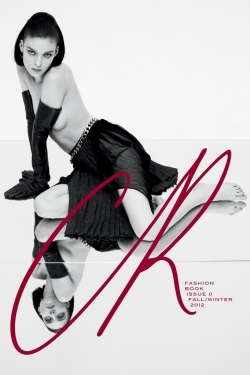
Carine Roitfeld on CR Fashion Book
“Vogue is a very beautiful magazine, an institution, and I learned so much working there … You can’t put yourself into competition with a magazine like Vogue; you have to create something new, something different. The page has been turned … It’s time to find something new, something fresh — for me and for the readers.”
Check out the mock-up of what we can expect for the magazine to look like, but it’s not the actual magazine, set to premiere in September 2012 at 288 pages. Of those, 100 are reserved for the cream of the fashion advertising crop: Chanel, Giorgio Armani, Cartier, Louis Vuitton and, of course, Gucci.
More recently, it was announced that the magazine is padding the masthead with industry heavyweights: Former Teen Vogue Accessories Director Shiona Turini confirmed to NYMag.com that she has joined Michaela Dosamantes on the market team for fashion and accessories. Turini started her new job May 10.
First Look: Gareth Pugh Designs Ballet Costumes — And They’re Pointy
Oh, I love this. Ballet AND fashion? This is almost as amazing as the Mulleavy sisters designing for Black Swan. Gareth Pugh created this look for the new ballet Carbon Life. Thoughts? Especially from any ballerinas out there?
Time Releases Top 100 Fashion Icons
Designers, editors, muses, models, photographers — TIME ranks them all in the “All-TIME Top 100 Fashion Icons” since the beginning of TIME in 1923. How many of these puns can we make? More importantly, did your favorites make the cut?

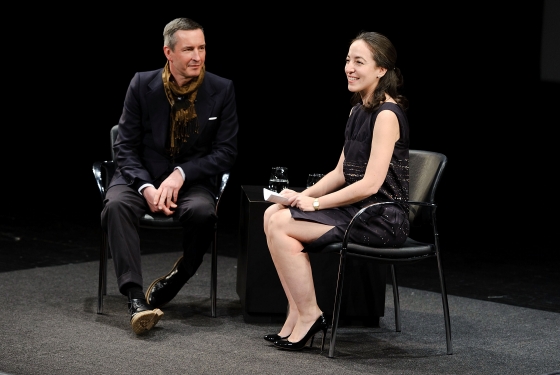
Dries Van Noten on “Fashion Talks” at French Institute Alliance Française

Appearing at the French Institute Alliance Française last weekend, Dries Van Noten was featured in the three-part “Fashion Talks” series, along with Stefano Pilati and Reed Krakoff. According to NYMag.com, the designer spoke with moderator Pamela Golbin about the challenges he faces as his brand’s creative director and CEO, going to fashion school in the 1970s, the difficulties of designing and more:
On attending Antwerp’s Royal Academy: “Going to fashion school in the seventies, it was really difficult to be judged by a [teacher] who said, like, ‘No short skirts, only pants,’ or, ‘You can do short skirts, but then you have to cover the knees with stockings,’ and things like that … ‘Long hair is untidy, so it had to be all chignon or short hair.’ ‘Jeans are for poor people.’ So, that was our teacher. So, in fact, when you have so many restrictions, you have to be enormously creative … It was kind of a battle … [But the most important lesson I learned from school was] that there are restrictions involved. And that restrictions … aren’t always bad. I think that in life there are restrictions. People have to wear clothes. [You can’t] design whatever you want.”
On the difficulties of designing: “Making my collection is for me sometimes troubling. Some people who know me really well, know it’s sometimes kind of a struggle. And after the show it gives me the postnatal depression … I have to cover a lot of markets. You see how people are in Germany and Holland and then in Japan, the weather, the climates [are different]. When you make a winter collection, it has to be successful in Hong Kong and Singapore and also in L.A. and New York … Shapes of women are also different, so you have to think, Okay, that’s more for slender people, that’s for the bigger people, and it’s all these things.”
On his use of fabrics: “I’m more inspired by things which I don’t like … nothing is so boring as something beautiful. I prefer ugly things, I prefer things which are surprising … You force yourself to ask yourself questions. Quite often I make a collection and I say, ‘Here’s a color I really don’t like.’ … My assistants will say ‘Okay, you don’t like lilac,’ [that means] this season will be lilac. It’s like you see a color, and you think, Why don’t I like this color? Maybe the composition is wrong, maybe the lighting is wrong — it would be beautiful in silk, but not the synthetic fabric … That for me is the fun, to play with all the [fabrics] … Sometimes fabrics come in two to three weeks before the collection has to be ready. Sometimes you get carried away … [But] when everything goes too smooth, I start to worry. I think, maybe it’s not good. It has to be a bit of a struggle. If it’s going too smooth … I think, My goodness, still three months to go. Maybe I’ll be bored by the time it’s over. Let’s add some things.”
On his fashion shows: “Fashion shows are really my way of communication. I don’t go on Twitter, I don’t go to parties, I don’t often do fashion talks like this. So for me, it’s really what I want to communicate. It’s the end of the story … So the venue, the light, the location, the sound, the hair, the makeup, all makes it for me. You have ten minutes to explain to your audience what you’re doing, what you want to tell. So everything has to be perfect.”
On being both the creative director and the CEO of his brand: “Both things give energy to each other, I think. I like to be aware of what’s happening on the business side also. I like to talk to the buyers of the stores which are buying the collection, I like to decorate stores, I like to see how the merchandise is put in the stores. I know a lot [about] that. Of course, I don’t want to be a victim of that either. [If] my sales teams says, ‘Oh, this style was very successful, please repeat it next season,’ I say, ‘If it was very successful one season, that means that everyone who wanted to have it bought it already, so let’s do something else.’”
On knockoffs: “That’s one of the disadvantages of modern technology. It’s so fast, that it’s already like, a few minutes after the show, on the Internet, you have like, the shoe’s details from the back, side, front. It makes it easy sometimes … I think it’s the reality. I don’t want to live in the old world, like 35, 30 years ago when people had prêt-à-porter and that was it. I think fast fashion is good. I think modern people combine vintage with designer clothes, with a piece they buy at Zara or other stores — why not?”
On what he wears day-to-day: “Something very boring. It’s a case for us fashion designers, when you have to make so many choices in the day — you have to select fabrics, styles — the last thing you want to do in the morning when you open your closet is say, ‘Okay, should I put my orange pants with my green sweater?’ … It’s more out of laziness [that I only wear my own clothes]. In fact, when I find a style I like I have my assistant make twelve pieces of it.”
Japan Fashion Week: Highlights
While I’m still recovering from the Great Head Cold of 2012, I decided to take it easy today and do a simple gallery. Lucky for me, the designs (and the hair — wow) at Japan Fashion Week have been anything but simple. I’ll be back in full multiple-postings force next week, but for now, enjoy these highlights.
Fashion Frenzy at W Hollywood
I learned a few surprising lessons yesterday that, normally, wouldn’t be surprising. But before we get into it, lets talk about Los Angeles. It’s the nature of the beast (the beast being the industry that defines this town and everyone in it) to put its willing enablers to the test. For every person who is fighting and clawing their way to the top, there are a hundred more who couldn’t get there and gave up.
Though this breeds talent and ambition, it also tends to breed cattiness and pessimism. And, more often than not, disappointment.
But after talking to a panel of industry experts at the SimplyStylist.com Seminar who have seen the sunny side of success, the crowd of stylists, editors and designers — myself included — learned that success comes not from back stabbing and bitchiness, but kindness and hard work. Those were the words that were spoken by every panelist, which included (left to right): Brenna Egan, Refinery29.com Los Angeles Editor and former Vogue staffer; Jamie Krell, E! and Style Network Style Expert; Alexis and Kym McClay, Naven Designers; Jeanne Yang, Celebrity Stylist, who also collaborates with Katie Holmes on their clothing line, Holmes & Yang; and Shea Marie, CheyenneMeetsChanel.com Fashion Blogger.

Hosted by Catt Sadler, E! News Host, the panel was held at the W Hotel in Hollywood, where the attendees were whipped into a fashion frenzy. After the seminar, we were let loose on the shopping boutiques in the next room. Forgive me for not taking more pictures (It’s time I got an iPhone, my Blackberry just isn’t working well for photos), because we were treated to a bar, DJ, photo booth and the hottest up-and-coming designers in Los Angeles. Jammy pack, anyone? No?

Anyway, I especially loved speaking with Jeanne and Brenna (both of whom I STILL can’t believe I actually met — they’re amazing!).
While building her business, Jeanne worked 120-hour weeks for three years straight. Just, take a moment to think about the dedication that requires. That’s 17.14 hours PER DAY. Her advice (directly to me! ah!) was that anytime someone gives you a negative, as she traced a small minus sign with her finger, “just turn it into a positive and give it right back to them.” She finished by tracing another line to make a literal positive sign. Her message was, always always be kind and grateful, no matter the circumstances, no matter how rude some people may be. Even if a Vanity Fair editor takes the credit for your work styling the biggest selling issue of the magazine ever (You know it — you probably had it, it was the Tom-and-Katie-present-Suri-to-the-world cover).
To continue what I will now call the inspire-a-thon, I also got to chat with Brenna. Before starting at Refinery29.com three months ago, she had previously worked as the West Coast Editor for OK! Magazine. She was also once a Vogue staffer. (Side note: To get hired as an assistant, she sat through an 8-hour interview with “Anna and the team.” Vogue does not mess around.) Brenna meets seven deadlines per day to create the content for R29. Basically, she’s writing all the time. All. The. Time. So I asked what she does in the event she has writer’s block? For her, she says, “It’s not an option.” I love that. I love that! She has to meet her deadlines, so, she has to keep writing. And you know what? She does it so well.
So that was my day, and it made me so excited to be in Los Angeles, to be an editor and to love fashion, over and over again. Special thanks to Sarah Pollack Boyd and SimplyStylist.com for hosting the event. Is it too early to buy my ticket for next year?