Movie-Based-On-A-Book Review: The Great Gatsby

GG Movie

Despite an almost to-the-word adherence to the book by the Baz Luhrmann-directed movie incarnation of F. Scott Fitzgerald‘s The Great Gatsby, I can’t say that the movie does the book  justice. But you know who it does justice? Baz Luhrmann. And barely even then.

The tragedy of The Great Gatsby the movie, besides the story (obviously), is that without the spectacle that is Baz, it could have been great. It had all the makings of a great movie: a willing cast that slipped subtly into their roles, fabulous costumes and music that was, somehow, both appropriate and inappropriate. It’s hard to comment on the script in that if it were bad, no one in Hollywood would have touched it. Who wants to screw up Fitzgerald?

If you’ve read the book, you know how big a role symbolism plays in it: the green light, the ash heaps, the ever-vigilant eyes of Dr. T.J. Eckleburg and the changing seasons that mirror Gatsby’s moods. While many people don’t like how over-wrought the symbolism is in Fitzgerald’s writing, Luhrmann takes it to a new level of in your face-ness—to the point that, after the first couple of scenes, you’re going, “OK, I get it! Are you done yet?”

And if wading through the muck of obvious symbolism wasn’t annoying enough, let’s talk about 3-D. I should tell you that I didn’t see the movie in 3-D, but if you’re going, you should. There are many parts of the movie that would have been better, specifically the party scenes. And, at the very least, the writing that jumps from Nick’s page and runs across the screen IN CASE WE MISSED IT at least feels like it would serve a purpose. Otherwise, it’s too much.

It sounds like I don’t like Baz Luhrmann movies, but that’s not true. He has a unique style—quick, jerky, exaggerated—that serves him well for movies like Moulin Rouge. While, at the beginning, it seems like the movie was about to amp up and go full speed, Luhrmann style, it seems like he stopped short of his signature type of all-out crazy and instead just said, “whatevs.” I mean, like I said earlier, he still makes it typical Baz spectacle, just not in the right way.

Enough with the complaining. What’s great about The Great Gatsby? Well, Leo is great. Particularly at the end, when he’s waiting for Daisy to call. His hope is so heartbreaking and it almost makes you think he’s right—she will call! She must! Even though you’ve read the book and know exactly what’s about to happen, you think maybe you read it wrong and everything will turn out fine.

Carey Mulligan is good, but not hypnotizing like I’d imagine a real-life Daisy would be. Her looks make her perfect to play any 20s-era character, but her voice isn’t full of money. Not that it matters here, because Gatsby’s biggest line in the entire book ISN”T EVEN IN THE MOVIE. Issues. I have issues with this.

Overall, I’m inclined to tell people—see it, don’t see it, it won’t change your life, but it won’t waste your $23 (at least here in L.A. Side note: remember when movie tickets were $6? Ah, the 90s).

Bitch Rating: 2.5 out of 4 bitches — worth watching.

Title: The Great Gatsby

Director: Baz Luhrmann

Length: 142 minutes

The Worst: Movie Posters as Book Covers

Seriously …

GG Movie

Is there anything worse …

the road

Then going to the book store, excited to read a new book  …

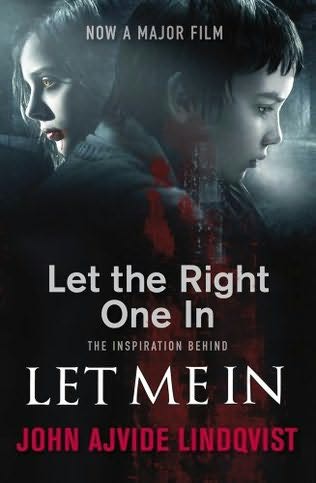
let the right one in

Only to find …

fight club

THIS

American-Psycho

NOOOOOOO. Wrong.

atonement

extremely-loud-and-incredibly-close-cover-195x300

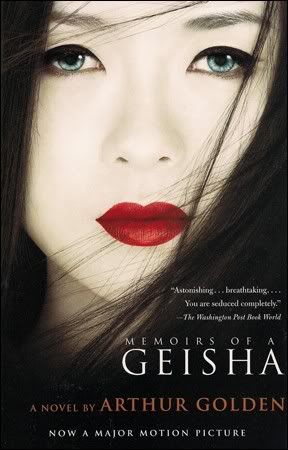
memoirsofageishavintagecanadasmall

shutter island

high fidelity

lovely bones

Gender Neutral Book Covers, Please

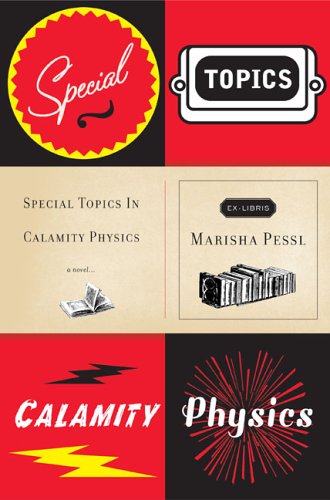
special-topics-in-calamity-physics

The call-to-action started with a simple tweet yesterday from author Maureen Johnson: “I do wish I had a dime for every email I get that says: ‘Please put a non-girly cover on your book so I can read it – signed, A Guy.'”

The Huffington Post continued the discussion with a slideshow of re-imagined covers of famous books written by men but designed as if they were written by women. It was brilliant.

I’ll admit that I had never noticed this, um, I’m going to call it a “point” instead of a “problem,” as I’m still not sure it’s something to complain over—anyway, I’d never really noticed this point until it was brought up. But even in discussion, I’m just not convinced this is an actual thing. It seems like it would be more common and concerning in the Young Adult book market, where growing teens are extremely concerned with gender stereotypes and may actually judge a book by its cover.

But in a market for grown-ups? Eh. As an example, I’d like to present one of my all-time favorite book. Not by a woman, but just ever, and it happens to be written by a women: Special Topics in Calamity Physics by Marisha Pessl. Definitely not a girly cover.

However, this small discussion seemed to open up to a much wider issue detailed in an article from The Guardian, “Coverflip: Author Maureen Johnson Turns Tables on Gendered Book Covers,” written by Allison Flood:

Bestselling novelist Jodi Picoult agreed. It’s “totally true”, she told Johnson. “I was critiqued for having ‘obligatory romance’ in all my books. When in fact, just last year, my book had none,” she tweeted. “Why is it ‘domestic fiction’ if a woman writes about family/relationships, but if a man does that, it’s Pulitzer-worthy? … The follow-up: what would happen if a woman submitted a book under male pseudonym to a publisher? Would it be treated differently?”

Amanda Hocking, the million-selling self-published novelist who landed a mega-bucks book deal for her paranormal romances, said the “gender cover-up” exposed by Johnson had made her “angry”. “I’m sick to death of this. I am so sick of the constant, blatant sexism. And any time anyone points anything out as being sexist, they’re accused of ‘whining’ or ‘nagging’ or ‘not taking a joke’,” wrote Hocking on her blog. “From the Steubenville rape trial to the obituary of Yvonne Brill, to the fact that more women read books than men, more women write books then men, but only a small fraction of books that win literary awards are written by women. Women are the publishing industry’s bread and butter, we are the backbone of the damn entertainment industry, but we are constantly demoted to ‘fluffy’ to ‘light’ to ‘meaningless.'”

Comments are there below for your views. Discuss!

Side note: I am, like many other readers, anxiously waiting for Marisha’s sophomore effort, Night Film, due out August 20 (two days after my birthday—it’s like she knows!)

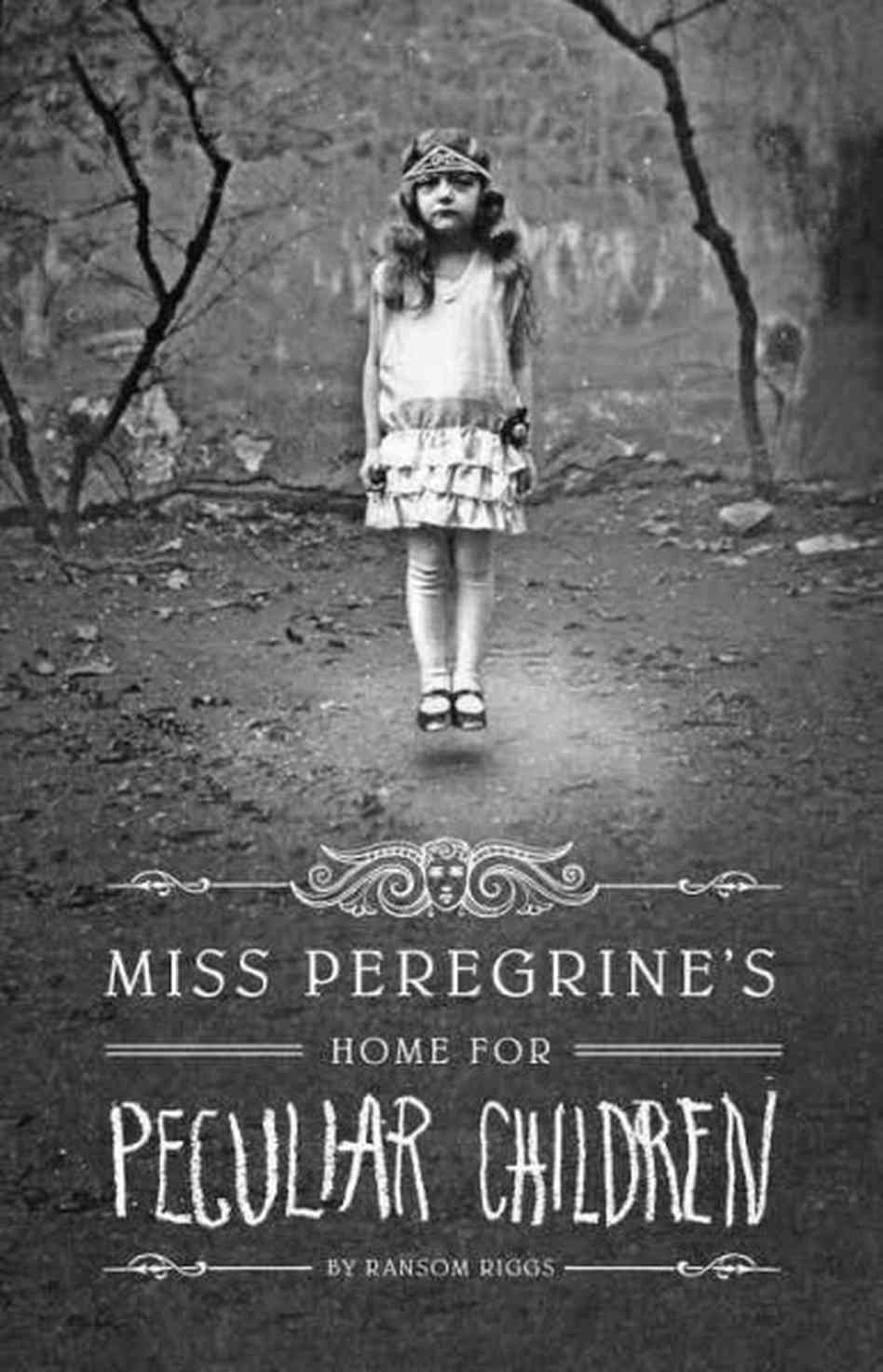
Miss Peregrine’s Home for Peculiar Children

9781594744761_custom-1b380501ae74b319d70c5758422a59bb340741ff-s6-c10

There’s only one word I wouldn’t use to describe Ranson RiggsMiss Peregrine’s Home for Peculiar Children: peculiar. And what a shame, because this is a really cool idea for a book.
Don’t get me wrong, the characters are plenty peculiar in the sense that they’re different. But “magical” or “unusual” may be better words for what these children are.

Also, the description tends to be a bit misleading. It comes off as though the protagonist, Jacob, travels oversees to a remote island to find out more about his grandfather’s past and meets “peculiar” children who turn out to be dangerous. Most of this is on point; he does travel to a remote island following the strange (“peculiar” might be a good fit here), tragic and untimely death of his grandfather. Jacob swears up and down that he saw what killed his grandpa Abe—monsters. Unfortunately, the only other person who was there didn’t see a thing and aids everyone else in the belief that Jacob has lost his non-peculiar marbles.

So, after some sleuthing to decipher the meaning behind Abe’s last words (which can also be classified as peculiar), he finds out the name of the island that Abe had told many fantastical stories about while Jacob was growing up. So he heads out with his father to find Abe’s old home, the home for peculiar children.

The characters are fairly well thought out, but none of them seemed especially unique. They were mainly cartoonish incarnations of other sci-fi characters we’ve all likely come across. Especially the villain, which had a mustache-twirling air about him.

The best part of the book was the extremely strange and often creepy vintage photographs that served as illustrations of the characters and some of the plot points.

Lucky for all of us, this book has been greenlit as a movie directed by Tim Burton. I’m really looking forward to doing a movie-based-on-a-book review for this one.

Bitch Rating: 1.5 out of 4 bitches — A little boring, but still a satisfying read.

Title: Miss Peregrine’s Home for Peculiar Children

Author: Ranson Riggs

Publisher: Quirk Books

Length: 352 pages (hardcover)

The Dinner

12234107-large

Here’s the best advice I can give you when you start reading The Dinner by Herman Koch: Open the cover and then immediately turn to page 100. Because you will be bored for awhile if you start at the beginning.

Here, I’ll help you skip ahead. The first 100 pages are as follows: couple A and couple B meet in a restaurant. Flashbacks ensue, describing how the couples met, how they’re related (brothers!) and how many children they have (couple A: one; couple B: two. One is adopted. This comes into play.)

We learn there’s a secret the husband A has been keeping from wifey A. Or at least thinks he’s keeping.

Boom! The first 100 pages. Done. You’re welcome.

That said, the next 200 pages are pretty fucking good. There are surprises and twists, emotional outbursts and tears when they’re least expected. Koch touches upon a variety of topics: class warfare, racism, politics. And he does so with subtlety and a bit of humor. Well played, Herms.

Look, I don’t want to spoil the rest for you, and going into much more detail would do that, as it’s really a fairly short book. But one that I recommend.

Bitch Rating: 2.5 out of 4 bitches — very engaging with a satisfying conclusion. Cheers!

Title: The Dinner

Author: Herman Koch

Publisher: Crown Publishing Group

Length: 304 pages (hardcover)