Los Angeles Times Festival of Books 2013

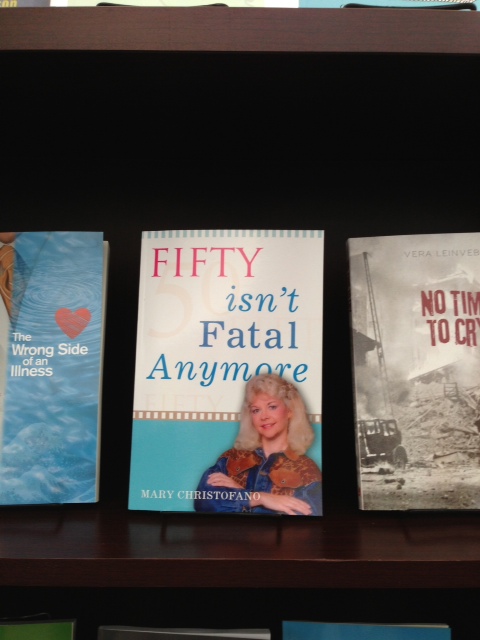
Last weekend was the Los Angeles TimesFestival of Books, in case you missed it. Don’t worry, you didn’t miss too much. I only got to go on Sunday, and though it had a lot of fun things to do (hello—ninja test? What level ninja are you? Yes, please!), I would have liked to have seen more authors and publishers. This was still a good way to spend a beautiful Sunday. Plus, free stuff!

Also, I learned that twice a year, Penguin puts out a compendium of the first chapters of its upcoming books. For free! But you can only get them at book festivals. I’m about to dig in, so I’ll keep you posted.

image (2)
The L.A. Times Festival of Books was held on the USC campus.
image (5)
Word.
image (6)
Sure. Why wouldn’t the L.A. Opera be at a book fair?
image (10)
Natural History Museum tent…and a lion head
image (3)
More USC
image (8)
duh-nuh-nuh-nuh-nuh-nuh-nuh-nuh—Batman!
image (1)
Just packed with books…
image (9)
Buddies

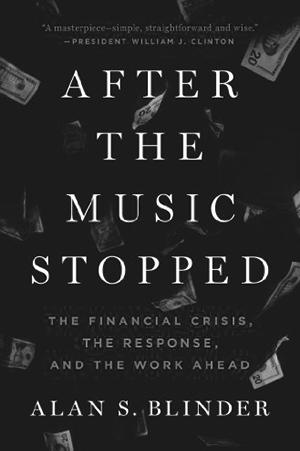
After the Music Stopped: The Financial Crisis, the Response, and the Work Ahead

After the Music Stopped: The Financial Crisis, the Response, and the Work Ahead by Alan S. Blinder

So a big, thick almost-500-page book about finance and economics sounds boring, yes?

It kind of is, unless you’re into that kind of thing. Fortunately, I am.

You know what sucks? Being in the middle of a fascinating debate about the economic recovery (or lack thereof? You’ll have to keep reading to find out) and realizing you don’t have the goods to back up your case. I hate feeling stupid.

The worst part is, I didn’t have to be caught unprepared. My bad. I headed straight to the bookstore to get some better background on what exactly went wrong with the economy, the financial system, the Lehman Brothers, and all that fun stuff.

And you know what? It’s REALLY FUCKING COMPLICATED. Do you know what a credit-default swap is? Yes? Well, congratulations, you don’t need to read this book. For the rest of you, start reading After the Music Stopped: the Financial Crisis, the Response, and the Work Ahead by Alan S. Blinder. And keep your computer handy because, unless you have a minor in economics, you’ll be looking up more than a few words.

Don’t worry, it’s not impossible to understand. Actually, Blinder does an excellent job of detailing exactly what went wrong with the economy, what led up to it and what the fallout means for our future. And considering the topic, he does an even better job of making it interesting. But let me be clear: You really need to be interested in this topic if you’re going to enjoy this book. Otherwise, put it down, save your money.

Bitch Rating: 2.5 out of 4 bitches — well done!

Title: After the Music Stopped: The Financial Crisis, the Response, and the Work Ahead

Author: Alan S. Blinder

Publisher: The Penguin Press

Length: 476 pages (hardcover)

“The Psychopath Test” aka A Guide to Evaluating Your Ex-Boyfriends

The Psychopath Test by Jon Ronson

There is a fairly standard test for evaluating whether or not someone is a psychopath. And not a “this guy almost sideswiped my car in rush hour traffic, what a psycho” kind of test, but a scientific evaluation: the Hare Test. Jon Ronson explores this in “The Psychopath Test: A Journey Through the Madness Industry.”

The Hare Test gives you a number of personality traits (aggressive narcissism) and actions (case history, aka, socially deviant lifestyle) on which you score the person you’re evaluating. Handy! And entertaining, especially when applied to ex-boyfriends and dick-wad co-workers.

But let’s be serious, when we say “evaluating” about ex-boyfriends workplace non-friends, we mean “judging.”

Now we have to pause for a moment. I wanted to jump in on the most interesting part of the book right away, the psychopath test. But I’ll rewind to the beginning of the book, where Ronson is summoned to solve an extremely intricate, far-reaching puzzle. It’s a riddle, crafted by an anonymous prankster, that was sent to people around the world. But not just any people; the riddle was sent to professors, psychologists, authors, etc., all who are respected in their fields. So, Ronson is drawn into this puzzle, and in his hunt for the source, it leads him to a mental hospital where he meets a patient with a unique problem.

In an effort to avoid jail time, this patient pled insanity, thinking he would land in a cushy mental ward where the patients play games and argue over the remote all day. Not so much. Instead, he ended up in one of the most notorious mental institutions in the world sleeping next to the scary kind of insane patients and wishing he’d thought his plan through a bit more. He tried to come clean, but it didn’t work. The sane man was diagnosed as insane and spent 12 years trying to get out of the institution. For perspective, had he served jail time, he would have only spent 4-5 years behind bars.

Being the intrepid journalist, Ronson researched both sides of the case. As it turns out, yes, the psychologists at the institution knew he was faking the insanity plea. His true diagnosis (or untrue, we’re never really told who’s right) is psychopathy. This is where the book gets interesting as Ronson dives into the field of psychology. This takes him all over the place, from inside Scientology to a meeting with a CEO who enjoyed, just a bit too much, firing people. Somewhere along his winding path, he meets Bob Hare, creator of the the Hare Test. Interesting conversations ensue.

Ronson ends up on a few different paths in his book, all of which are interesting, but not vital. Unfortunately, the variety of topics pulls focus from his most interesting subject: psychopaths. To Ronson’s credit, he left me wanting to know more about psychopathy and the tangled web of ethics in psychology. The problem is that he should have let this be the overall theme of the book. Instead, we get lost on a search for the creator of the riddle.

Oh yeah, the riddle! We forget about that for awhile, and that’s not a bad thing. Though he wraps it up nicely in the end (no spoilers ahead, you can keep reading), I would willing trade the mystery of the riddle for more tales of insanity — or non-insanity? Surprisingly, that’s the strength of the book. Ronson makes it clear that we just don’t know who’s right and who’s crazy.

Let’s jump back to the guilty-pleasure subject of evaluating the psyche of exes. To give you an idea of how useful this test is in finally figuring out why your ex was Such A Fucking Asshole, I have lovingly evaluated the worst of my pretty bad ex-boyfriends. Let’s call him “Richard.”

To accurately evaluate a proposed psychopath, for each item listed below (keep in mind, this isn’t the full test), you assign a score of 0-2. A psychopath will usually fall in the 30-40 points range. So, Richard:

  • Glibness/superficial charm (Unfortunately, I was not the first naive lady to be lured in by his silver-tongued charm. Also, not the last.)
  • Grandiose sense of self-worth (He was convinced he would be governor of Texas one day. And considering his borderline-legal teenage antics, this was a complete delusion.)
  • Pathological lying (Do I even have to … no. You get it.)
  • Conning/manipulative (Every time we fought, he would find a way out of the dog house and back to our bed.)
  • Lack of remorse or guilt (Thinking back, he would sometimes say he was sorry, but there was always a weirdly frozen look in his eyes. Like not even he believed what he was saying.)
  • Failure to accept responsibility for own actions (Ha. Clearly.)
  • Need for stimulation/proneness to boredom (He could not ever sit still. There was no hanging out and being lazy on a Sunday afternoon, one of my most cherished activities.)
  • Poor behavioral control (There was one night where he ended up driving his car THROUGH THE SUNROOF. Like, he was riding on the roof of his car, steering while someone else worked the pedals.)
  • Lack of realistic long-term goals (I mean, governor? When he always traveled with brass knuckles in his pocket?)
  • Impulsivity (“We’ve been dating a month— you should move to Texas! So we can get married! Hey, I’m bored and your flight leaves in two hours, let’s go look at engagement rings!”)
  • Early behavior problems (See above: brass knuckles. Coupled with many bottles of Jack Daniels.)
  • Promiscuous sexual behavior (Oh, oh, this is the best part. Have you ever seen cheaterville.com? You know, where disgruntled exes post their partner’s indiscretions? Not only has he been written up, but he has also been searched for multiple times.)

In the end, I scored Richard a 28.

But here’s the problem with the psychopath test, which Ronson relies on heavily to highlight a major problem with the field of psychology: the whole thing is subjective. There was a scientific basis in creating the test, but in executing it, you rely on a process that is marred with human error.

Try as I might, of course I’m going to score Richard as borderline psychopath. Hello, he’s still my ex-boyfriend, there is no objectivity in that. But I’ll happily admit, there is a sense of closure that comes with feeling that all of his obscene behavior wasn’t a result of my actions alone.

Bitch Rating: 3 out of 4 bitches — excellent!

Title: The Psychopath Test: A Journey Through the Madness Industry

Author: Jon Ronson

Publisher: Riverhead Trade

Length: 288 pages (paperback)

Dries Van Noten on “Fashion Talks” at French Institute Alliance Française

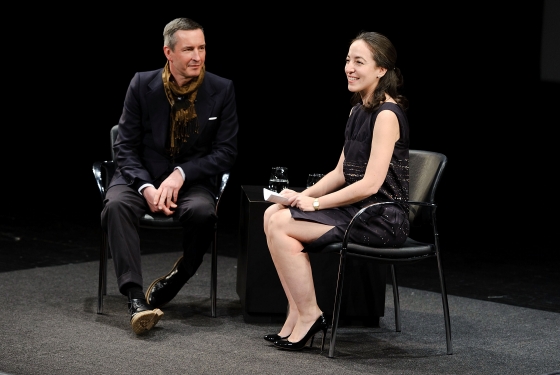
Dries Van Noten and Moderator Pamela Golbin at FIAF’s “Fashion Talks” Series

Appearing at the French Institute Alliance Française last weekend, Dries Van Noten was featured in the three-part “Fashion Talks” series, along with Stefano Pilati and Reed Krakoff. According to NYMag.com, the designer spoke with moderator Pamela Golbin about the challenges he faces as his brand’s creative director and CEO, going to fashion school in the 1970s, the difficulties of designing and more:

On attending Antwerp’s Royal Academy: “Going to fashion school in the seventies, it was really difficult to be judged by a [teacher] who said, like, ‘No short skirts, only pants,’ or, ‘You can do short skirts, but then you have to cover the knees with stockings,’ and things like that … ‘Long hair is untidy, so it had to be all chignon or short hair.’ ‘Jeans are for poor people.’ So, that was our teacher. So, in fact, when you have so many restrictions, you have to be enormously creative … It was kind of a battle … [But the most important lesson I learned from school was] that there are restrictions involved. And that restrictions … aren’t always bad. I think that in life there are restrictions. People have to wear clothes. [You can’t] design whatever you want.”

On the difficulties of designing: “Making my collection is for me sometimes troubling. Some people who know me really well, know it’s sometimes kind of a struggle. And after the show it gives me the postnatal depression … I have to cover a lot of markets. You see how people are in Germany and Holland and then in Japan, the weather, the climates [are different]. When you make a winter collection, it has to be successful in Hong Kong and Singapore and also in L.A. and New York … Shapes of women are also different, so you have to think, Okay, that’s more for slender people, that’s for the bigger people, and it’s all these things.”

On his use of fabrics: “I’m more inspired by things which I don’t like … nothing is so boring as something beautiful. I prefer ugly things, I prefer things which are surprising … You force yourself to ask yourself questions. Quite often I make a collection and I say, ‘Here’s a color I really don’t like.’ … My assistants will say ‘Okay, you don’t like lilac,’ [that means] this season will be lilac. It’s like you see a color, and you think, Why don’t I like this color? Maybe the composition is wrong, maybe the lighting is wrong — it would be beautiful in silk, but not the synthetic fabric … That for me is the fun, to play with all the [fabrics] … Sometimes fabrics come in two to three weeks before the collection has to be ready. Sometimes you get carried away … [But] when everything goes too smooth, I start to worry. I think, maybe it’s not good. It has to be a bit of a struggle. If it’s going too smooth … I think, My goodness, still three months to go. Maybe I’ll be bored by the time it’s over. Let’s add some things.

On his fashion shows: “Fashion shows are really my way of communication. I don’t go on Twitter, I don’t go to parties, I don’t often do fashion talks like this. So for me, it’s really what I want to communicate. It’s the end of the story … So the venue, the light, the location, the sound, the hair, the makeup, all makes it for me. You have ten minutes to explain to your audience what you’re doing, what you want to tell. So everything has to be perfect.”

On being both the creative director and the CEO of his brand: “Both things give energy to each other, I think. I like to be aware of what’s happening on the business side also. I like to talk to the buyers of the stores which are buying the collection, I like to decorate stores, I like to see how the merchandise is put in the stores. I know a lot [about] that. Of course, I don’t want to be a victim of that either. [If] my sales teams says, ‘Oh, this style was very successful, please repeat it next season,’ I say, ‘If it was very successful one season, that means that everyone who wanted to have it bought it already, so let’s do something else.’”

On knockoffs: “That’s one of the disadvantages of modern technology. It’s so fast, that it’s already like, a few minutes after the show, on the Internet, you have like, the shoe’s details from the back, side, front. It makes it easy sometimes … I think it’s the reality. I don’t want to live in the old world, like 35, 30 years ago when people had prêt-à-porter and that was it. I think fast fashion is good. I think modern people combine vintage with designer clothes, with a piece they buy at Zara or other stores — why not?”

On what he wears day-to-day: “Something very boring. It’s a case for us fashion designers, when you have to make so many choices in the day — you have to select fabrics, styles — the last thing you want to do in the morning when you open your closet is say, ‘Okay, should I put my orange pants with my green sweater?’ … It’s more out of laziness [that I only wear my own clothes]. In fact, when I find a style I like I have my assistant make twelve pieces of it.”

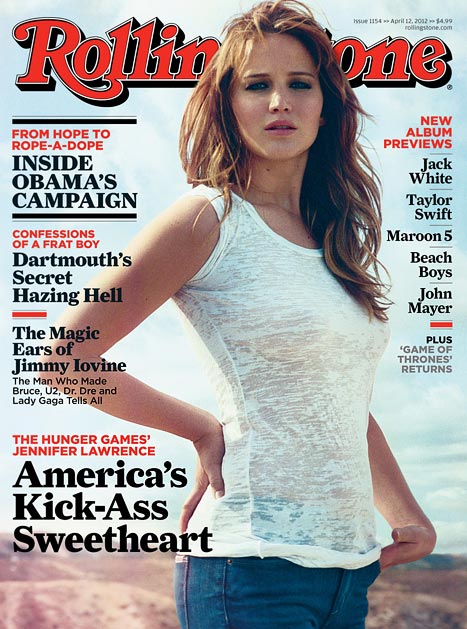
Jennifer Lawrence is Awesome in Rolling Stone — And Probably All the Time

Evidence that Jennifer Lawrence is fun to hang out with: In her recent Rolling Stone interview, writer Josh Eells included stories of her friends’ first-time encounters with the open book that is Jennifer Lawrence.

Woody Harrelson:  “I was on my bus, and on my bus I have a yoga swing. Jennifer comes on, and she goes, ‘Hi, Woody, I’m J — is that a sex swing?’ Her first sentence to me.”

Zoe Kravitz:“I’d met her a few times, and she was like, ‘You should come over and we’ll hang out. So I go over to her apartment, and she opens the door in a towel. She’s like, ‘Come in, sorry, you’re early, I was about to shower.’ And she drops her towel and gets in the shower, and starts shaving her legs, totally naked. She was like, ‘Are we here yet? Is this OK?’ And I was like, ‘I guess we’re there!'”

Josh Hutcherson: “When I got cast, she called me up for one of those five-minute ‘Excited to work with you, blah, blah, blah’ things. The conversation started with her saying, ‘Think about a catheter going in — ouch!’ and then turns into a 45-minute rant about zombies and the apocalypse.”

She sounds like fun, does she not?

LAFW: Worst of the Weekend (the Oh, Honies)

Part of the fun of Los Angeles Fashion Week is all the attendees who take fashion risks knowing there will be a tent full of industry insiders there to judge. Sometimes the results are perfection, but other times … not so much. Same goes for the runway. While there are looks from this weekend that are now burned into my mind as new favorites, there were also some outfits that looked like Disney princesses dropped acid and got scissor happy with some fabric (for example, except for one or two looks, all of Sarahi). We call these “Oh, honey” looks because when you see them, your first reaction is to say “Oh, honey … no no no.” Check out the worst looks of the weekend in the slideshow below.

LAFW: Best of the Weekend

I’ll be honest, I was less than impressed with the clothes I saw on the runway during Los Angeles Fashion Weekend. Also, disappointed — after seeing some incredibly talented designers at FGI‘s “Meet the Designer and the Muse” last week, I really thought the runway looks would blow my mind. Overall, the clothes at L.A. Fashion Weekend were just … uninspired. I expected more. Better. I mean, Los Angeles has such a talent pool of unique artists. Artists. What Katie May can do with double georgette fabric is beyond words, and gravity, because that’s what her final results do; they defy gravity. I swear, her model last week was floating around the room.

Anyway, there were some looks from Ashlee Brooks and Dina Bar-El that were gorgeous. But most of my favorite fashion came from the people watching the shows. Check out the slideshow below for my favorite looks, both on the runway and off. Oh, and though I thought the clothes from Hi Fashion were bit too Lady Gaga-centric, their dancing models and spontaneous singing made for a great show.